Embarking on science experiments at home can be one of the most exciting and memorable parts of your homeschooling journey. From dazzling chemical reactions to fascinating biological observations, these hands-on experiences bring learning to life. However, to truly solidify that learning and ensure a comprehensive educational record, good documentation is absolutely key. This is where a well-structured homeschool science lab note template becomes an invaluable tool, transforming messy scribbles into organized, insightful records of discovery.
Think about it: science isn’t just about doing; it’s about observing, questioning, and recording. Without a system in place, those precious moments of “aha!” can easily be forgotten, and the educational value of the experiment diminishes. Detailed notes help reinforce the scientific method, encourage critical thinking, and provide a tangible record of your child’s learning process.
Fortunately, you don’t need to reinvent the wheel every time you set up a new experiment. With a practical template, you can streamline the note-taking process, making it less daunting for both you and your student. It provides a consistent framework that guides your child through the essential steps of scientific inquiry, ensuring no crucial detail is overlooked.
Why Detailed Lab Notes are a Homeschool Game Changer
Implementing detailed lab notes in your homeschool science curriculum isn’t just about keeping records; it’s about nurturing a scientific mindset and enhancing the learning experience profoundly. When students are required to document their work meticulously, they engage with the material on a deeper level, transforming passive observation into active participation.
This practice forces students to slow down and truly observe what is happening during an experiment. Instead of just seeing a chemical change, they are prompted to describe the color, the smell, the texture, and the timing of the reaction. This level of detail sharpens their observational skills, which are fundamental to all scientific disciplines.
Furthermore, detailed note-taking is intrinsically linked to the scientific method itself. It encourages students to articulate their hypothesis before starting, meticulously record the procedure, document observations objectively, and finally, draw conclusions based on their findings. This systematic approach instills the core principles of scientific inquiry from a young age.
Essential for Record Keeping and Portfolio Building
For many homeschooling families, maintaining thorough records is a necessity, whether for state requirements or personal peace of mind. Lab notes provide concrete evidence of science learning, offering a clear snapshot of the experiments conducted, the concepts explored, and the skills developed over time.
These notes become a vital part of your child’s academic portfolio. Should you ever need to demonstrate their educational progress, apply for college, or even transition back into a traditional school setting, a robust collection of lab notes speaks volumes about their engagement with science and their ability to conduct and document scientific inquiry.
A Powerful Learning Aid
The act of writing down observations and conclusions is a powerful tool for memory retention and comprehension. When students articulate their thoughts and findings in writing, it solidifies their understanding of the scientific concepts at play. It moves information from short-term memory to long-term understanding.
Reviewing past lab notes is also an excellent way to prepare for quizzes, tests, or simply to refresh their memory on previously covered topics. They can revisit their own words, their own drawings, and their own conclusions, making the review process much more personal and effective than simply reading from a textbook.
What to Include in Your Homeschool Science Lab Note Template
Creating an effective template means making sure it covers all the crucial aspects of a scientific investigation, guiding your student through the entire process from start to finish. A comprehensive template ensures that nothing important is missed, providing a clear and organized framework for every experiment.
The best templates strike a balance between structure and flexibility, allowing for customization while still maintaining a consistent format. Each section serves a specific purpose, contributing to a thorough and insightful record of the experiment.
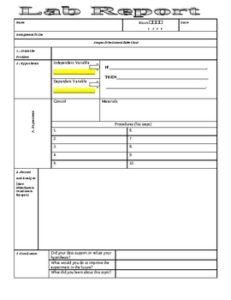
Here are some key sections you’ll want to include in your homeschool science lab note template:
Remember, a good homeschool science lab note template should be adaptable. You might add or remove sections based on the complexity of the experiment or the age of your student. The goal is to make documentation a natural and helpful part of the scientific process, not a burdensome chore.
By providing a structured yet flexible framework for documenting experiments, you empower your child to engage with science more deeply and systematically. These carefully crafted notes will not only serve as a detailed record of their scientific explorations but also as a testament to their growing understanding of the world around them. Embracing this habit transforms every experiment into a robust learning opportunity, fostering skills that extend far beyond the science lab.