Organizing a silent auction can feel like orchestrating a symphony of details, from tracking donated items to managing bidder information and ensuring a smooth checkout process. Without a robust organizational system, even the most dedicated event planners can quickly find themselves overwhelmed. That’s precisely why a well-structured silent auction master list template is not just helpful, but absolutely essential for success. It acts as the backbone of your event, keeping every crucial piece of information neatly organized and accessible.
This comprehensive guide will walk you through the importance of utilizing such a template, detailing its key components, and providing actionable insights to streamline your event management. You’ll learn how to leverage a master list to save time, reduce stress, and maximize your fundraising potential. A well-executed silent auction hinges on meticulous planning, and our template insights are designed to empower you every step of the way.
Streamlining Your Silent Auction Planning with an Effective Template
Effective event planning begins with a clear roadmap, and for silent auctions, this means having all your item, donor, and bidder data in one centralized location. A dedicated template transforms a chaotic collection of notes into an organized, actionable database. It reduces the likelihood of errors and omissions, which can be costly in terms of both time and revenue.
Imagine trying to remember which donor contributed which item, its estimated value, and its starting bid, all while managing live bids on auction night. This level of complexity demands an immediate and accessible reference point. A master list template provides that solution, acting as your single source of truth throughout the entire auction process.
Why a Master List is Crucial for Event Success
A master list is more than just a spreadsheet; it’s the foundation of your silent auction’s operational efficiency. It ensures that no detail is overlooked, from the moment an item is solicited to its final sale and delivery. This level of meticulous organization directly impacts the donor experience, the bidder experience, and ultimately, your fundraising results.
Successful events are characterized by seamless execution, and this can only be achieved with clear data management. A master list helps you easily generate item descriptions for display, prepare bid sheets accurately, and assign items to specific sections of your auction layout. It dramatically simplifies the entire logistical flow. Research suggests that well-organized events can see a 20-30% increase in participant satisfaction and engagement, directly correlating to higher bids and contributions.
Key Elements to Include in Your Silent Auction Item List
To be truly effective, your silent auction item list needs to capture a specific set of data points for each item. These elements provide a comprehensive overview and allow for easy tracking and reporting. Thinking through these details beforehand will save countless hours later on.
Start by considering what information is critical for both pre-event setup and post-event analysis. This foresight ensures that your template is robust enough to handle all stages of the auction. Missing key data points can lead to last-minute scrambles and potential inaccuracies that undermine your event’s professionalism.
Some essential columns include:
- Item Number: A unique identifier for each item.
- Item Name/Description: A concise and appealing title for the item.
- Donor Name: Who generously provided the item.
- Donor Contact Information: Email, phone, address for thank-you notes.
- Estimated Value: The fair market value of the item.
- Starting Bid: The minimum acceptable bid.
- Bid Increment: How much bids must increase by.
- Buy-It-Now Price (Optional): A fixed price for immediate purchase.
- Restrictions/Expiration: Any limitations (e.g., blackout dates for travel).
- Location/Display Table: Where the item is placed during the event.
- Winning Bidder Name: Who won the item.
- Winning Bid Amount: The final amount paid.
- Payment Status: Whether the item has been paid for.
- Delivery/Pickup Status: How the item was transferred to the winner.
Choosing the Right Format for Your Tracking Needs
While a spreadsheet (like Excel or Google Sheets) is the most common and versatile format for a silent auction master list template, other options exist depending on your organization’s technical capabilities and the scale of your event. Software solutions designed specifically for event management can offer more integrated features. However, for most non-profits and community groups, a well-designed spreadsheet is often sufficient and cost-effective.
The key is to select a format that is easy to update, share among committee members, and readily accessible. Cloud-based spreadsheets are excellent for collaborative planning, allowing multiple team members to view and update information in real-time. Ensure your chosen format allows for easy filtering, sorting, and reporting, which are crucial for managing data efficiently.
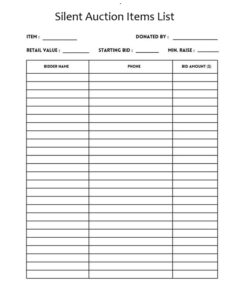
Sample Silent Auction Master List Template
Having a visual example of a silent auction master list template can greatly assist in understanding its structure and utility. This section provides a detailed breakdown of what your template might look like, highlighting the crucial columns and their purpose. Remember, this is a flexible tool, and you can always customize it to fit the specific needs of your fundraising event.
The goal of this sample is to demonstrate how various pieces of information about each auction item can be systematically organized. This organized approach minimizes confusion and maximizes the efficiency of your auction committee. It becomes a living document, updated throughout the planning and execution phases of your event.
Here is an example structure for a comprehensive silent auction master list template:
| Item # | Category | Item Name & Description | Donor Name | Donor Contact (Email) | Donor Contact (Phone) | Estimated Value | Starting Bid | Bid Increment | Buy-It-Now Price | Restrictions/Expiry | Display Location | Winning Bidder Name | Winning Bidder ID | Winning Bid Amount | Payment Status | Delivery/Pickup Notes |
|---|---|---|---|---|---|---|---|---|---|---|---|---|---|---|---|---|
| 001 | Experiences | Weekend Getaway for Two at The Grand Hotel | The Grand Hotel | [email protected] | (555) 123-4567 | $750 | $300 | $25 | $650 | Expires 12/31/2024, weekends only | Table 1, Item A | Jane Doe | B007 | $425 | Paid | Picked up at event |
| 002 | Dining | Gift Certificate to “Taste of Italy” Restaurant ($100) | Taste of Italy Restaurant | [email protected] | (555) 987-6543 | $100 | $40 | $5 | $80 | No restrictions | Table 2, Item C | John Smith | B012 | $60 | Paid | Mailed after event |
| 003 | Home Goods | Hand-Crafted Ceramic Vase | Local Artisan Studio | [email protected] | (555) 234-5678 | $150 | $60 | $10 | $120 | Unique piece, no returns | Table 1, Item D | |||||
| 004 | Sports | Signed Basketball by Local Team Captain | Team Boosters Club | [email protected] | (555) 876-5432 | $250 | $100 | $15 | $200 | Autographed item | Table 3, Item B |
This detailed table allows you to track everything from the initial donation details to the final transaction. Columns like “Item #” and “Category” help with organization and physical placement at the event. “Donor Contact” information is crucial for sending timely thank-you notes, a vital part of donor stewardship. The financial columns (“Estimated Value,” “Starting Bid,” “Winning Bid Amount”) provide a clear overview of fundraising progress. Finally, the “Payment Status” and “Delivery/Pickup Notes” ensure every winner receives their item and all funds are collected efficiently.
Maximizing Fundraising Potential with Detailed Item Tracking
Beyond just organizing items, a detailed master list plays a critical role in enhancing your fundraising efforts. By meticulously tracking each item, you gain valuable insights that can inform your pricing strategies, identify your most generous donors, and streamline the post-event wrap-up. This data-driven approach moves your auction from a hopeful gamble to a strategic fundraising endeavor.
Understanding the full lifecycle of each donated item, from its initial acquisition to its successful handover, is key to maximizing revenue. An accurate silent auction master list template provides the transparency needed to make informed decisions throughout the entire event process. This careful tracking helps ensure that every opportunity for fundraising is identified and capitalized upon.
Efficiently Managing Donor Information and Contributions
Your donors are the lifeblood of your silent auction, and managing their contributions effectively is paramount. The master list serves as a mini-CRM (Customer Relationship Management) system for your event, recording who donated what, and allowing you to attribute success back to their generosity. This detailed record-keeping is essential for building long-term relationships.
Beyond simply thanking donors, having their information readily available allows you to analyze donation trends. You can identify repeat donors, common item types, and even assess the average value of donations over time. This historical data is invaluable for future fundraising initiatives and helps personalize your outreach efforts. It fosters a sense of appreciation and encourages continued support.
Tracking Bids and Revenue Generation
During the event itself, the master list evolves into a real-time tracking tool for bids and revenue. Although bid sheets will capture individual bids, the master list allows for a centralized update of winning bids and amounts. This consolidation is vital for quickly determining total funds raised and identifying any discrepancies.
Post-event, this tracking information becomes the basis for financial reconciliation and reporting. You can easily see which items performed well, which may have been underpriced, and the overall success rate of your auction items. Clear revenue generation data is crucial for assessing the event’s financial health and reporting back to stakeholders and board members.
Post-Event Analysis and Future Improvements
The utility of your silent auction master list template extends far beyond the event night. It becomes a powerful tool for post-event analysis, helping you understand what worked well and where improvements can be made for future auctions. Analyzing the data gathered in your master list is a critical step in a cycle of continuous improvement.
By reviewing categories, donor engagement, and item performance, you can refine your procurement strategies, adjust pricing models, and optimize your event layout. For instance, if certain categories consistently underperform, you might focus on soliciting different types of items next time. This data-driven insight transforms each auction into a learning opportunity, ensuring that your next event is even more successful and efficient.
Harnessing the power of a comprehensive silent auction master list template is a game-changer for any organization aiming to host a successful and lucrative fundraising event. It brings order to what can often be a chaotic process, ensuring that every detail, from donor contact to final bid, is meticulously recorded and managed. This level of organization not only streamlines operations but also significantly enhances the overall experience for donors, bidders, and event staff alike.
By implementing these strategies and utilizing a robust template, you can transform your silent auction from a challenging undertaking into a well-oiled machine. This ensures that your efforts are truly maximized, leading to increased funds raised and a greater impact for your cause. Take the first step towards a stress-free and highly profitable event by adopting a detailed master list today.