Venturing into the exciting world of high school science labs can be both thrilling and a bit overwhelming. From mixing chemicals to dissecting specimens, there’s so much to learn and observe. Amidst all this hands-on discovery, one crucial skill often gets overlooked but is absolutely essential for success: effective lab note-taking. That’s precisely why having a robust high school science lab note template can be a game-changer for any student looking to excel in their scientific endeavors.
Good lab notes aren’t just about recording what happened; they are a direct reflection of your understanding, observation skills, and critical thinking. They serve as your personal scientific journal, documenting every step, every measurement, and every unexpected outcome. Imagine trying to replicate an experiment or study for a test without clear, organized notes – it would be a real challenge, wouldn’t it?
Whether you are tackling chemistry, biology, or physics, a well-structured approach to documenting your experiments ensures you capture all the vital information. It helps you connect the dots, draw accurate conclusions, and truly grasp the scientific principles at play. Let’s explore how you can create and utilize an effective system for your lab work.
Building Your Comprehensive Lab Notebook Structure
A well-organized lab notebook is your best friend in any science class. It’s not just a place to scribble down information; it’s a systematic record that tells the story of your experiment from start to finish. Think of it as a detailed blueprint that someone else could follow to replicate your work exactly. This structure not only aids in clarity but also reinforces the scientific method itself.
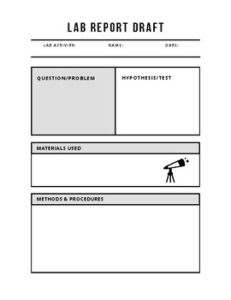
Every effective lab note begins with the basics. You’ll want to clearly identify the experiment. This means including the title of the experiment at the top of your page, along with the date you performed it. If it’s a group project, don’t forget to jot down the names of your lab partners. These simple details ensure that your notes are always contextualized and easy to reference later on.
The Objective: What Are You Trying to Find Out?
Before you even touch a beaker, it’s vital to articulate the objective or purpose of your experiment. What question are you trying to answer? What hypothesis are you testing? Writing this down forces you to think critically about the experiment’s goal, providing a clear direction for your work. It helps keep you focused and ensures your observations are relevant to the task at hand.
Materials and Apparatus: The Tools of the Trade
Next up is a comprehensive list of all the materials, equipment, and chemicals you’ll be using. Be specific with quantities and concentrations where applicable. For example, instead of just “water,” you might write “250 mL distilled water.” This level of detail is crucial for reproducibility and for understanding any variables that might influence your results. You can even include simple sketches of complex setups if it helps clarify.
Procedure: Step-by-Step Guidance
The procedure section is where you detail the exact steps you followed during the experiment. It’s like a recipe for your scientific investigation. Number each step clearly and concisely. Avoid vague language; aim for precision. If you deviate from the original procedure provided by your teacher, make sure to note those changes. This is important because even minor alterations can significantly impact your results.
Observations and Data: Recording Your Findings
This is arguably the most critical part of your lab notes. Here, you record everything you observe and measure during the experiment. This includes qualitative observations like color changes, bubbling, or temperature increases, as well as quantitative data such as mass, volume, or time measurements. Use tables, charts, or diagrams to present numerical data clearly. Remember, write down what you see, not what you think you should see. Even unexpected results are valuable data points.
Analysis and Conclusion: Making Sense of It All
Finally, your notes should include an analysis of your results and a conclusion. In the analysis, discuss what the data means, identify any trends or patterns, and address potential sources of error. The conclusion should directly answer your original objective or hypothesis. Did your results support your hypothesis? What did you learn? This section demonstrates your ability to interpret data and reflect on the scientific process.
Maximizing Your Lab Note Effectiveness
Beyond the structure, there are several habits and techniques that can elevate your lab note-taking from merely adequate to truly exceptional. Consistent effort in these areas will not only improve your understanding of current experiments but also build a strong foundation for future scientific studies.
One of the best strategies is to treat your lab notebook as a live document. Don’t wait until the end of the lab period to jot everything down from memory. Make notes in real-time as you perform each step. This ensures accuracy and captures immediate observations that might otherwise be forgotten. Always write clearly and legibly, as you’ll be referencing these notes often.
To further enhance your documentation and ensure nothing important slips through the cracks, consider these practical suggestions that many successful scientists employ:
-
Use a dedicated notebook: A bound notebook helps keep all your experiments in one place and prevents loose pages from getting lost. Number your pages for easy referencing.
-
Be descriptive: When describing observations, use sensory details. What did it look like? Smell like? Sound like? (Within safety limits, of course!) The more detail, the better for recalling the experience later.
-
Draw diagrams: Sometimes a picture is worth a thousand words. Sketching your experimental setup, unique observations, or even data representations can add immense clarity to your notes.
-
Date and initial every entry: This creates a chronological record and ensures accountability for your work, a common practice in professional scientific environments.
-
Review and revise: After the lab, take a few minutes to review your notes. Add any missing details, clarify ambiguities, or write down questions that arose. This reinforces learning and helps solidify the concepts.
Mastering the art of effective lab note-taking is a skill that will serve you well beyond high school science class. It instills discipline, enhances observational abilities, and strengthens your capacity for critical analysis, all vital components of any scientific or technical field.
By adopting a structured approach, like utilizing a robust high school science lab note template and integrating these best practices, you’re not just completing an assignment; you’re building a valuable record of your scientific journey. This meticulous documentation will become an invaluable resource, helping you ace exams, understand complex concepts, and even spark future scientific curiosity.