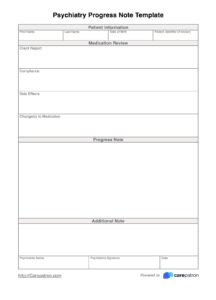
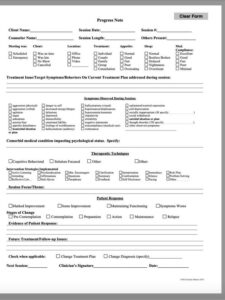
In the demanding field of mental health care, meticulous documentation isn’t just a requirement; it’s a cornerstone of effective treatment, communication, and legal compliance. A well-designed psychiatric nursing progress note template can transform the often-tedious task of record-keeping into a streamlined, efficient, and highly valuable part of patient care. It helps nurses capture the nuanced details of a patient’s journey, from their initial presentation to their daily progress and challenges, ensuring nothing important gets overlooked.
Think of these notes as the living story of a patient’s time in care, told through the lens of nursing observation and intervention. They reflect the patient’s mood, behaviors, responses to medication or therapy, and their overall functional status. Without a structured approach, these vital pieces of information can become disparate fragments, making it harder for the care team to piece together a coherent picture or track long-term trends.
That’s why embracing a standardized, yet flexible, template isn’t just about ticking boxes. It’s about empowering nurses to provide the highest quality of care, fostering clear communication among the multidisciplinary team, and safeguarding both the patient’s well-being and the professional integrity of the caregivers.
Why a Well-Crafted Progress Note Template is Indispensable
When it comes to psychiatric nursing, every observation, every interaction, and every intervention carries significant weight. A robust progress note template acts as a reliable framework, guiding nurses to systematically record these crucial details. It helps standardize the information gathered, making it easier for other team members – psychiatrists, therapists, social workers, and other nurses – to quickly grasp the patient’s current status and continuum of care. This consistency is vital, especially in busy inpatient units or outpatient settings where multiple caregivers might interact with the same patient.
Beyond mere organization, these templates are powerful tools for tracking a patient’s clinical trajectory. Imagine trying to identify subtle changes in a patient’s thought patterns or mood over several weeks without structured notes. It would be an incredibly challenging task. A good template prompts nurses to document specific areas such as affect, cognition, risk assessment, coping strategies, and response to therapeutic interventions, allowing for easy comparison over time and informed adjustments to the care plan.
Furthermore, effective documentation is a critical component of interdisciplinary communication. When a nurse completes a progress note using a clear template, they are essentially updating the entire care team. This ensures everyone is on the same page regarding the patient’s mental state, physical health, medication adherence, and any acute concerns. This shared understanding is fundamental for collaborative care planning and seamless transitions across different levels of care.
From a legal and ethical standpoint, comprehensive and accurate notes are non-negotiable. They serve as a legal record of the care provided, protecting both the patient and the healthcare professional. In cases of audits, reviews, or even legal proceedings, well-documented progress notes provide undeniable evidence of due diligence, appropriate interventions, and adherence to professional standards. They reflect the nurse’s clinical judgment and the rationale behind their actions.
Balancing Detail and Efficiency
Crafting a template isn’t about creating an exhaustive form that takes hours to complete. It’s about finding the sweet spot between comprehensive detail and efficient documentation. An ideal template allows for rapid input of routine observations while providing ample space for narrative descriptions of complex situations or unique patient responses. It often includes sections for objective observations (what the nurse saw or heard), subjective statements (what the patient reported), nursing interventions performed, and the patient’s response to those interventions.
Consider including prompts for safety assessments, such as suicidality or homicidality risk, and documentation of any de-escalation techniques used. These specific sections ensure that critical safety measures are always addressed and recorded. The goal is to create a template that aids in critical thinking and comprehensive assessment, rather than becoming a burdensome administrative task.
Crafting Your Own Effective Psychiatric Progress Note Template
Developing a psychiatric nursing progress note template that truly works for your specific practice setting requires careful consideration. No two units or clinics are exactly alike, and the specific patient population, staffing models, and regulatory requirements will all influence what makes a template effective. Start by reviewing existing templates, both within your facility and those shared by professional organizations, to get a sense of best practices and common elements. Engage your nursing team in the process; their direct experience on the front lines will provide invaluable insights into what information is most crucial and how it can be captured most efficiently.
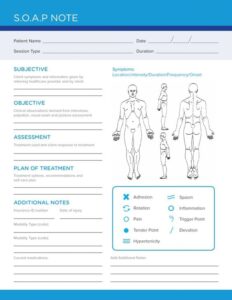
Many templates adopt established charting formats like SOAP (Subjective, Objective, Assessment, Plan), DAR (Data, Action, Response), or BIRP (Behavior, Intervention, Response, Plan). Each format has its strengths, and choosing the right one often depends on the predominant type of documentation required in your setting. For instance, SOAP is excellent for problem-oriented charting, while DAR can be very useful for focusing on specific patient issues or concerns as they arise throughout a shift. No matter the format, ensure that the template includes clear sections for patient identification, date and time of the note, and the signature/credentials of the charting nurse.
When implementing a new or revised template, dedicated training and ongoing support are key. Provide clear guidelines on how to use each section, offer examples of appropriate documentation, and create opportunities for nurses to practice using the new format. Regular feedback loops can help identify areas for improvement or clarification, ensuring that the template evolves to meet the practical needs of the nursing staff and the clinical needs of the patients. A well-designed psychiatric nursing progress note template empowers nurses to tell the patient’s story completely and accurately.
Ultimately, the power of a well-structured progress note extends far beyond simple record-keeping. It enhances patient safety, improves the continuity of care, facilitates accurate billing, and serves as a vital educational tool for both new and experienced nurses. By investing time in creating and utilizing an effective template, healthcare organizations are investing directly in the quality of their mental health services.