Life happens, and sometimes, you find yourself needing to take time off work due to illness or injury. When that happens, your employer will almost certainly ask for proof from a medical professional. Providing a proper doctor’s note isn’t just a formality; it’s a crucial part of maintaining clear communication with your workplace and ensuring your absence is documented correctly. It helps everyone stay on the same page and keeps your employment record accurate.
Navigating the process of obtaining and submitting these notes can sometimes feel like an added stress when you’re already feeling unwell. This is where a well-structured doctors note template for work comes into play. Having a reliable template can make a significant difference, simplifying the communication between you, your doctor’s office, and your employer, ensuring all necessary information is included without any guesswork.
This article will walk you through why these notes are important, what essential details they should always contain, and how you can effectively use or even create your own template to ensure you’re always prepared, minimizing hassle during challenging times.
Understanding the Importance of a Doctor’s Note for Your Job
Employers often require a doctor’s note for several reasons, ranging from HR policies to legal compliance and simply managing staff attendance. From a human resources perspective, these notes help track sick leave, ensure fairness among employees, and prevent potential abuse of company policies. For businesses, it’s also about managing workflow and understanding when an employee might return, allowing them to plan accordingly. Legally, a doctor’s note can be vital for substantiating claims under various labor laws, such as the Family and Medical Leave Act (FMLA) or local sick leave ordinances, protecting both the employee and the employer.
A valid doctor’s note isn’t just a scrap of paper; it’s a professional document. It typically needs to come from a licensed medical practitioner and include specific information. This usually means the doctor’s name, clinic details, the date the note was issued, the patient’s full name, the exact dates of absence, and a general reason for the absence. Crucially, it should also include a clear statement about when the employee is expected to return to work, or if any accommodations might be needed upon their return.
For employees, providing a doctor’s note promptly protects their job security and ensures their absence is recorded as authorized. It clarifies the situation for their manager and colleagues, preventing misunderstandings or unnecessary concern. Without a proper note, an absence could be considered unauthorized, potentially leading to unpaid leave, disciplinary action, or even questions about job commitment, depending on company policy.
In some cases, especially with extended leave or specific medical conditions, the note might need to be more detailed, indicating any work restrictions or the need for a modified duty schedule. Understanding your company’s specific policies on sick leave and required documentation is always a good idea, as these can vary significantly between organizations and industries.
Beyond just the immediate absence, a well-documented medical history through these notes can be beneficial if there are long-term health issues or recurring absences. It provides a consistent record that can support requests for reasonable accommodations under acts like the Americans with Disabilities Act (ADA), fostering a more supportive and inclusive work environment.
Key Elements of an Effective Doctor’s Note
- Healthcare Provider Information: Full name of the doctor, their title, and the name and contact details of the clinic or hospital.
- Date of Issuance: The specific date the note was written and provided to the patient.
- Patient Identification: The full legal name of the employee who was seen by the doctor.
- Dates of Absence: The precise dates the employee was unable to work or attended an appointment.
- Reason for Absence: A brief, general statement regarding the medical necessity of the absence. Specific medical details are usually not required due to privacy concerns.
- Return to Work Date: A clear indication of when the employee is medically cleared to return to their duties.
- Doctor’s Signature: An authentic signature from the healthcare provider, often accompanied by a stamp or official letterhead.
Ensuring all these elements are present makes the note credible and effective, leaving no room for ambiguity.
Crafting Your Own Doctor’s Note Template
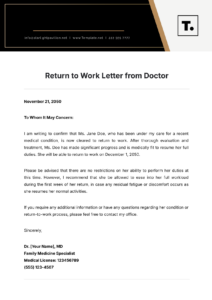
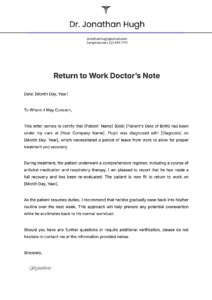
Creating your own doctor’s note template for work can be a surprisingly practical step. While you can’t fill out the medical details yourself, having a pre-designed structure that your doctor or their administrative staff can quickly complete saves time and ensures no crucial information is missed. Think of it as a helpful guide that streamlines the process during what might already be a stressful time for you. Instead of relying on various formats from different clinics, your template ensures consistency.
A good template should include placeholders for all the “Key Elements” we discussed earlier. You’d have clear spaces for the doctor’s name and clinic, the date the note is written, your name, the dates you were or will be absent, a line for the general reason (which the doctor fills in), and the anticipated return-to-work date. It should also have a dedicated area for the doctor’s signature and any official stamp or letterhead. This professional layout not only makes it easier for the medical staff but also presents a polished document to your employer.
When using a template, always remember to verify that all the specific details related to your current illness or appointment are accurately filled in by your healthcare provider. Never submit a blank or partially completed template. Once your doctor has filled it out and signed it, make a copy for your personal records before submitting the original to your employer. This practice is crucial for your own documentation and can be helpful should any questions arise later regarding your absence.
Having a prepared template is a simple yet effective way to manage your work absences professionally and efficiently. It demonstrates responsibility and ensures that your employer receives all the necessary information in a clear and consistent format.