In the demanding world of mental health care, effective documentation is not just a bureaucratic requirement; it is a cornerstone of ethical practice, clinical efficacy, and client safety. Keeping accurate, comprehensive, and timely notes ensures continuity of care, facilitates collaborative treatment, and provides a clear record of the therapeutic journey. Without a reliable system for tracking client progress, interventions, and outcomes, even the most dedicated professional can find themselves struggling to maintain consistent, high-quality service.
This is where a robust mental health progress note template becomes an invaluable asset for practitioners across various settings. It transforms the often-dreaded task of documentation into a streamlined, efficient process, ensuring that all critical information is captured consistently without sacrificing the nuanced details of each session. By providing a structured framework, these templates help mental health professionals focus more on their clients and less on administrative burdens, ultimately enhancing the therapeutic experience.
Adopting a well-designed template helps to standardize documentation practices, reducing the likelihood of missed information and improving the overall quality of client records. It supports better clinical decision-making, makes communication with other healthcare providers clearer, and offers essential protection in terms of legal and ethical compliance. In essence, it empowers clinicians to maintain meticulous records with greater ease and confidence.
Why a Structured Progress Note Template is a Game-Changer for Mental Health Professionals
Imagine spending precious hours after client sessions trying to recall every detail, intervention, and client statement, only to realize some crucial information might have been overlooked. This common scenario leads to professional burnout, inconsistent records, and potential gaps in client care. An unstructured approach to note-taking can transform what should be a straightforward record-keeping task into a significant source of stress, diverting energy that could otherwise be spent on clinical excellence and self-care.
A dedicated progress note template addresses these challenges head-on by offering a consistent format for every session. This consistency is vital for tracking subtle shifts in client presentation, observing patterns, and objectively measuring progress toward treatment goals. When every note follows the same structure, it becomes significantly easier to review a client’s history, identify effective interventions, and adjust the treatment plan as needed, ensuring a more adaptive and responsive therapeutic process.
Beyond clinical utility, standardized templates play a critical role in safeguarding a practice against legal and ethical scrutiny. Insurance companies, licensing boards, and legal systems often require specific information to be included in client records. A comprehensive template ensures that all necessary data points, from presenting issues to risk assessments and future plans, are consistently documented, making audits smoother and providing robust legal protection should a challenge arise.
Key Components of an Effective Progress Note Template
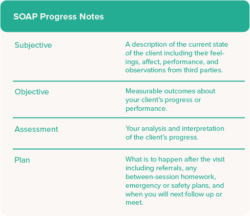
What exactly makes a progress note template effective? It’s about more than just filling in blanks; it’s about creating a narrative that accurately reflects the session while adhering to professional standards. Different models exist, such as SOAP (Subjective, Objective, Assessment, Plan), BIRP (Behavior, Intervention, Response, Plan), and DAP (Data, Assessment, Plan), each offering a slightly different focus. Regardless of the model, certain core elements are indispensable for a truly useful template.
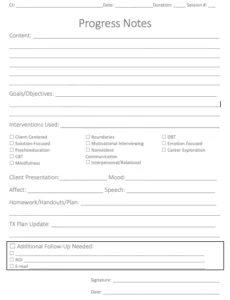
Here are some essential components typically found in a well-designed template:
- Client Identifying Information: Ensures the note is correctly attributed.
- Date, Time, and Duration of Session: Provides a clear timeline of services.
- Type of Session: Specifies if it was individual, group, family, or other.
- Client Presentation/Subjective Data: Captures the client’s self-report of symptoms, feelings, and concerns.
- Therapist Observations/Objective Data: Documents observable behaviors, affect, and interactions during the session.
- Interventions Provided: Details the specific therapeutic techniques and strategies used by the therapist.
- Client Response to Interventions: Describes how the client reacted to the interventions and discussions.
- Progress Toward Goals: Assesses movement related to the established treatment plan goals.
- Risk Assessment and Management: Notes any safety concerns and actions taken.
- Plan for Next Session: Outlines future steps, homework, or focus areas.
- Therapist Signature and Credentials: Authenticates the note and the provider.
Including these components transforms a simple note into a rich, comprehensive document that tells the story of the client’s journey. It creates a detailed and nuanced record that supports clinical reasoning and promotes accountability for both the client and the therapist.
Moreover, a well-structured template supports continuous professional development and supervision. It allows supervisors to quickly grasp the essence of a session, offer targeted feedback, and guide supervisees in developing their clinical skills and documentation practices. This structured approach fosters a culture of excellence and thoroughness across the practice.
Choosing and Customizing Your Ideal Mental Health Progress Note Template
The landscape of mental health documentation is rich with various templates, each designed with different therapeutic orientations, practice settings, and compliance requirements in mind. Navigating this variety can feel overwhelming, but the key is to understand that the “best” template isn’t universally fixed; it’s the one that most effectively aligns with your unique professional needs, theoretical approach, and the specific client population you serve. Taking the time to explore different models and examples will pay dividends in the long run.
Once you’ve identified a foundational template that resonates with your practice, the next crucial step is customization. Rarely will an off-the-shelf solution perfectly capture every nuance of your work. Customization might involve adding specific fields for scales you frequently use, incorporating language specific to your theoretical framework (e.g., CBT-specific interventions, psychodynamic themes), or adjusting sections to better reflect your clinic’s workflow. The goal is to make the template a tool that enhances, rather than hinders, your natural documentation process.
Consider these points when selecting and customizing a template:
- Does it support your primary theoretical approach?
- Are insurance and billing requirements easily met through its structure?
- Is it user-friendly and time-efficient to complete?
- Can it integrate seamlessly with your Electronic Health Record (EHR) system?
- Does it allow for rich, client-centered language alongside objective data?
Ultimately, the aim is to craft a documentation process that feels intuitive and supportive, rather than burdensome. By thoughtfully choosing and adapting your `mental health progress note template`, you can transform a necessary administrative task into an integral part of providing outstanding, client-centered care.
Embracing structured documentation is more than just fulfilling administrative duties; it is about elevating the quality and consistency of mental health care. By systematically capturing the intricacies of each session, professionals can ensure that every client receives personalized, evidence-informed treatment that evolves thoughtfully over time. This dedicated approach fosters better therapeutic outcomes and strengthens the overall integrity of mental health services.
The right tools, like a thoughtfully designed and implemented mental health progress note template, empower clinicians to focus on what truly matters: connecting with clients, facilitating healing, and guiding them towards improved well-being. It is an investment in both practice efficiency and, more importantly, in the profound impact professionals have on the lives of those seeking support.