Securing funding is a pivotal moment for any growing business. Whether you are expanding operations, purchasing new equipment, or managing working capital, a business loan can provide the necessary financial boost. However, simply receiving funds is only one part of the equation; proper documentation is absolutely essential to protect both the lender and the borrower. This is where legal instruments come into play, formalizing the agreement and outlining the terms.
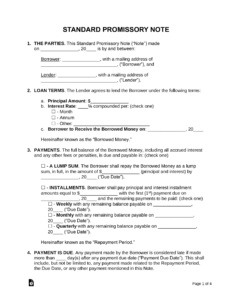
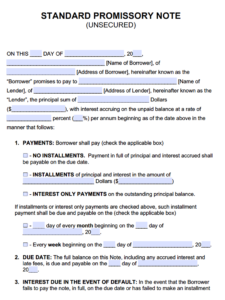
One of the most critical documents in any lending scenario is the promissory note. It serves as a written promise from the borrower to repay a specific sum of money to the lender under agreed-upon terms. When dealing with commercial financing, having access to a reliable business loan promissory note template can save a significant amount of time and ensure all the necessary legal bases are covered, providing clarity and preventing potential misunderstandings down the line.
Understanding the components and implications of such a document is vital for any entrepreneur or financial institution. A well-structured promissory note not only formalizes the debt but also details the repayment schedule, interest rates, and the consequences of defaulting, making it an indispensable tool in responsible financial management for businesses of all sizes.
Understanding the Core Components of a Promissory Note
A promissory note, while seemingly straightforward, is a legally binding contract with several key elements that must be clearly defined to be effective and enforceable. Think of it as the blueprint for your loan repayment journey. Each part plays a crucial role in outlining the expectations and obligations of both parties, ensuring transparency and minimizing potential disputes. Without these elements, the document might lack the necessary legal weight to stand up in court or resolve disagreements effectively.
The Parties Involved
Firstly, the note must clearly identify the borrower, often referred to as the “maker” or “promisor,” and the lender, known as the “payee.” Full legal names and addresses for both individuals or entities must be included. If the borrower is a business, its legal name and registered address are crucial, as is the name and title of the authorized signatory. This clarity prevents confusion about who is responsible for the debt and who is entitled to receive the repayment.
Principal Amount and Interest
Naturally, the exact amount of money being borrowed, known as the principal, must be stated unequivocally. Alongside this, the interest rate applicable to the loan needs to be specified. This can be a fixed rate, meaning it remains constant throughout the loan term, or a variable rate, which might fluctuate based on an index. The method of calculating interest (e.g., simple interest, compound interest) and the frequency of its application should also be detailed to avoid any ambiguity regarding the total cost of the loan.
Repayment Schedule and Terms
This section is perhaps the most critical for the borrower. It outlines how and when the loan will be repaid. This could involve a single lump sum payment on a specific date, regular installments over a period, or payments that include both principal and interest. The due dates for each payment, the amount of each payment, and the total duration of the loan must be explicitly stated. Some notes might also include grace periods for late payments and penalties or late fees that will be applied if payments are missed.
Default and Remedies
No one hopes for a default, but a robust promissory note must clearly define what constitutes a default (e.g., missing a payment, filing for bankruptcy) and the actions the lender can take in such an event. This often includes accelerating the entire outstanding balance, meaning it becomes immediately due, or pursuing legal action to recover the debt. Including these clauses offers protection to the lender and makes the borrower fully aware of the consequences of failing to meet their obligations.
Signatures and Witnesses
For the promissory note to be legally binding, it must be signed by the borrower. In many cases, it’s also advisable for the lender to sign, acknowledging the terms. Depending on local laws and the significance of the loan, having the signatures witnessed by an impartial third party or notarized can add an extra layer of legal validation, confirming the authenticity of the signatures and the voluntary agreement to the terms.
Why Your Business Needs a Well-Drafted Promissory Note
A properly constructed promissory note is far more than just a formality; it is a foundational pillar for sound financial dealings within your business and with external parties. Its presence elevates a casual agreement into a professional, legally recognized commitment, fostering trust and providing a clear framework for all involved. This is especially true when you are navigating the complexities of business financing, where clarity is paramount.
Firstly, a well-drafted note provides undeniable legal enforceability. In the unfortunate event of a dispute or default, this document serves as irrefutable proof of the debt and the agreed-upon terms. Without it, recovering funds could become a lengthy, complicated, and often impossible task, relying solely on verbal agreements which are notoriously difficult to prove in court. It acts as a shield, protecting the lender’s investment and providing a clear path for legal recourse if repayment obligations are not met.
Furthermore, it ensures clarity and prevents misunderstandings. By meticulously detailing all aspects of the loan—from the principal amount and interest rates to the repayment schedule and default clauses—it leaves little room for ambiguity. Both parties understand their rights and responsibilities from the outset, which helps in maintaining good business relationships and avoids potential conflicts that can arise from vague or unwritten agreements. A comprehensive business loan promissory note template simplifies this process, ensuring all critical details are consistently covered.
Using a standardized yet customizable template also projects professionalism. It demonstrates that your business takes its financial obligations seriously and operates with a high degree of diligence and legal awareness. This can enhance your reputation with lenders, investors, and even employees, signaling that financial agreements are handled with care and precision. It also offers the flexibility to adapt to specific loan situations while retaining a solid legal backbone, making it a truly versatile tool for any business.
Embracing the use of a clear and comprehensive promissory note is a hallmark of responsible business practices. It not only safeguards financial interests but also builds a strong foundation of trust and transparency in all lending and borrowing relationships. Taking the time to properly document these agreements is an investment in the long-term stability and success of your enterprise.