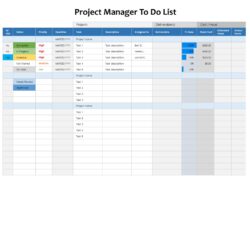
Ever felt like your software project is a tangled mess of ideas, deadlines, and forgotten requirements? You are certainly not alone. Many development teams find themselves overwhelmed by the sheer volume of work and the constant changes that are inherent in creating new software. This is precisely where a well-crafted software development task list template comes into play, transforming chaos into clarity and helping teams navigate complex projects with far greater ease and precision.
It is more than just a simple checklist; it is a strategic tool designed to break down large, daunting goals into manageable, actionable steps. By outlining every phase of development, from initial planning to final deployment, such a template provides a clear roadmap for everyone involved. It fosters accountability, improves communication, and ultimately increases the chances of delivering a successful product on time and within budget.
Throughout this article, we will explore the core components that make an effective task list, discuss how to best implement and adapt it to your team’s specific needs, and ultimately show you how this foundational tool can revolutionize your software development workflow. Get ready to embrace a more organized, efficient, and stress-free way of building great software.
The Anatomy of an Excellent Software Development Task List
Building software is akin to constructing a complex building; you would not start laying bricks without a detailed blueprint, would you? The same principle applies here. An effective software development task list is your project’s blueprint, guiding every action from conception to completion. It is not just about listing tasks; it is about structuring them in a way that provides maximum clarity and utility to the entire development team.
One of the most critical aspects is ensuring each task is defined with absolute clarity. Vague entries like “work on user module” are unhelpful. Instead, tasks should be granular and specific, such as “design database schema for user profiles,” “implement user authentication endpoint using OAuth 2.0,” or “develop front-end UI for user registration form with validation.” The more precise your task descriptions, the less room there is for misinterpretation and wasted effort.
Clarity and Granularity
Breaking down large features into smaller, manageable tasks is paramount. Imagine trying to eat an entire pizza in one go; it is overwhelming. But slice by slice, it becomes achievable. Similarly, a feature like “implement payment gateway” should be decomposed into “research payment gateway options,” “integrate API for chosen gateway,” “test payment processing with various scenarios,” and “add error handling for payment failures.” This level of detail makes tasks less intimidating and easier to assign and track.
Furthermore, each task should ideally have a clear “definition of done.” What criteria must be met for a task to be considered complete? Is it merged into the main branch? Has it passed all unit tests? Is it reviewed by another developer? Establishing these criteria upfront eliminates ambiguity and ensures a consistent standard of quality across the project. It prevents the all-too-common scenario where a task is thought to be finished by one person but still requires significant work according to another.
Prioritization and Dependencies
Not all tasks hold equal weight or urgency. A well-structured task list incorporates a system for prioritization, allowing the team to focus on the most critical items first. This could involve simple categories like “Must-Have,” “Should-Have,” and “Could-Have,” or more detailed frameworks like MoSCoW (Must have, Should have, Could have, Won’t have). Understanding what absolutely needs to be done next, versus what can wait, helps maintain momentum and ensures that the most impactful work is always moving forward.
Equally important is identifying dependencies between tasks. Rarely does a software project proceed as a linear sequence; tasks often rely on the completion of others. For instance, you cannot build a user interface that consumes an API until that API endpoint has been developed and tested. Explicitly noting these dependencies helps prevent bottlenecks and allows for more accurate scheduling. It empowers team leads to allocate resources effectively and foresee potential roadblocks before they derail the project timeline.
Ownership and Deadlines
Every task on your list needs an owner. Assigning a specific person responsible for each item fosters accountability and clarity. When everyone knows who is doing what, there is less confusion and a greater sense of individual ownership over contributions to the project. This does not mean a task owner cannot ask for help or collaborate, but rather that they are the primary driver for getting that specific piece of work across the finish line.
Finally, realistic deadlines are essential for effective project management. While flexibility is important in an agile environment, setting target completion dates for tasks provides a crucial benchmark for tracking progress and managing expectations. These deadlines should be collaborative and agreed upon by the task owner, ensuring they are achievable and reflective of the actual effort required. Overly aggressive deadlines lead to burnout and poor quality, while excessively loose ones can foster procrastination.
Putting Your Software Development Task List Template into Action
Having a meticulously designed software development task list template is a fantastic start, but its true power lies in its implementation and ongoing adaptation. A static template, no matter how perfect, will quickly become outdated if it is not actively used, updated, and integrated into the team’s daily workflow. This isn’t just a document; it is a living blueprint for your project.
Modern software development often leverages specialized tools that go far beyond simple spreadsheets for managing tasks. Platforms like Jira, Trello, Asana, Monday.com, or even GitHub Projects offer robust features for creating, assigning, tracking, and collaborating on tasks. These tools can visualize progress, automate notifications, and integrate with other development tools, making the task management process far more dynamic and efficient. Choosing the right tool depends on your team’s size, complexity of projects, and specific needs, but the goal remains the same: to make the task list accessible, actionable, and transparent.
The development landscape is constantly shifting, and so too must your task list. Regular review and adaptation are critical. Daily stand-up meetings, weekly sprint reviews, and retrospective sessions provide excellent opportunities to discuss progress, identify new tasks, refine existing ones, and re-prioritize based on evolving requirements or unforeseen challenges. Embrace the idea that your software development task list template is a dynamic entity, continuously improved by the collective experience and insights of your team. This agile approach ensures the list remains relevant and genuinely serves the project’s evolving needs.
Ultimately, a well-implemented task list transforms the abstract goal of building software into a concrete, manageable process. It moves your team from a state of reactive problem-solving to proactive, strategic execution. By embracing a systematic approach to task management, teams can significantly enhance their productivity, reduce stress, and consistently deliver high-quality software that meets the evolving demands of their users.
Investing time in creating and maintaining a robust software development task list template is not merely an administrative chore; it is a foundational pillar for project success. It provides the clarity, structure, and accountability necessary to navigate the complexities of modern software engineering. With a well-managed task list, your team is not just building software; it is building it smarter, more efficiently, and with a far greater sense of shared purpose and accomplishment.