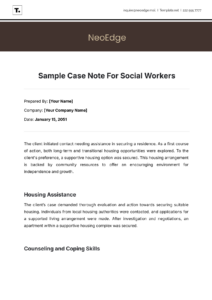
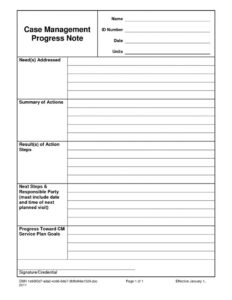
Navigating the intricate world of social work psychotherapy can be incredibly rewarding, yet it comes with its own set of administrative demands. Among the most crucial is the meticulous documentation of client sessions through progress notes. Crafting a comprehensive and compliant social work psychotherapy progress note template isn’t just about ticking boxes; it’s about ensuring continuity of care, protecting yourself ethically and legally, and ultimately, providing the best possible service to those who rely on your expertise. Without a well-structured approach, note-taking can quickly become a daunting and time-consuming task that detracts from direct client engagement.
Effective progress notes serve as a vital record of the therapeutic journey. They chronicle a client’s challenges, their progress, the interventions applied, and the professional insights gained during each encounter. These documents are indispensable for internal review, collaboration with other professionals, and fulfilling requirements set by insurance providers or regulatory bodies. Moreover, they offer a clear historical account that can be invaluable in understanding long-term patterns and successes.
Given the complexities involved, from adhering to various ethical guidelines to capturing nuanced client information, having a reliable framework can dramatically simplify the process. This article aims to explore the key elements of an exemplary template, offering insights and practical advice to help social workers streamline their documentation, enhance accuracy, and reclaim valuable time for what truly matters: supporting their clients.
The Essential Components of an Effective Progress Note
Creating a truly effective progress note template for social work psychotherapy involves more than just listing a few headings. It requires a thoughtful integration of clinical best practices, ethical considerations, and practical workflow efficiency. Each section of your template should serve a clear purpose, guiding you to capture the most pertinent information in a structured, consistent manner. A well-designed template acts as a mental checklist, ensuring no critical details are overlooked, even during the busiest of days.
Client Information and Session Details
At the very top, every progress note must clearly identify the client, the date of the session, the session number, and the duration. This foundational information is crucial for record-keeping, billing, and ensuring that the note is correctly attributed. It might also include the date the note was written, your name, and your professional credentials, establishing accountability and context for the documentation. Consistency in how this information is recorded across all notes is paramount for easy navigation and auditing.
Subjective (S) Data
This section captures the client’s perspective and their reported experiences since the last session or during the current session. It includes their chief complaint, presenting concerns, mood, symptoms, and any significant life events they discuss. It’s often beneficial to use direct quotes where appropriate, as this preserves the client’s voice and provides rich qualitative data. This part of the note gives a clear picture of what the client brings to the session and how they perceive their own progress or struggles.
Objective (O) Observations and Interventions
Here, you document your clinical observations and the interventions you employed. This is where you record the client’s demeanor, affect, appearance, and any non-verbal cues you observed. Crucially, it also details the specific therapeutic techniques, strategies, or modalities you utilized during the session. For example, did you employ cognitive restructuring, explore trauma using EMDR principles, facilitate a role-play, or assign specific homework? Be specific about what you did and how the client responded to the intervention.
Assessment (A) and Clinical Formulation
The assessment section is where you synthesize the subjective and objective data. It reflects your professional analysis of the client’s current status, their progress towards treatment goals, any changes in their symptoms or functioning, and your clinical impressions. This part often includes an updated risk assessment if applicable and your professional judgment on the client’s engagement, motivation, and overall response to therapy. It is the heart of your clinical reasoning and helps to justify the continuation or modification of your treatment plan.
Plan (P) for Future Sessions
Finally, the plan outlines the next steps. This includes the date and time of the next session, any homework or tasks assigned to the client, referrals made, and specific adjustments or continuations of the treatment plan. It should clearly state the goals for the upcoming session and any modifications to your therapeutic approach. This section ensures continuity of care and provides a roadmap for both you and the client moving forward, reinforcing accountability and goal orientation.
Beyond the Basics: Maximizing Your Template’s Potential
While the core components of a social work psychotherapy progress note template are vital, truly maximizing its potential involves a thoughtful approach to customization, ethical considerations, and technological integration. A generic template might cover the basics, but one tailored to your specific practice, client population, and theoretical orientation will be far more effective and efficient. Think of your template not as a rigid form, but as a living document that can evolve with your practice.
Customization is key. Consider adding sections that are particularly relevant to your niche, such as specific prompts for tracking trauma symptoms if you specialize in PTSD, or areas for family systems dynamics if you primarily work with families. Including a space for “strengths identified” or “coping strategies utilized” can also reinforce a strengths-based perspective, which is central to social work practice. The more your template reflects your actual work, the more naturally and thoroughly you’ll complete your notes.
Remember, the goal of a robust social work psychotherapy progress note template is not only to document sessions but also to safeguard client information and comply with all legal and ethical mandates. This includes adherence to HIPAA or other relevant privacy regulations, ensuring that sensitive data is protected and accessible only to authorized personnel. Regularly reviewing your documentation practices against current standards helps maintain integrity and avoids potential pitfalls.
Here are some practical tips for enhancing your template and documentation process:
- Regularly review and update your template to reflect evolving best practices or changes in your clinical focus.
- Utilize drop-down menus, checkboxes, or standardized scales within digital templates to save time and ensure consistency.
- Integrate your template with your Electronic Health Record (EHR) system for seamless data entry and secure storage.
- Train yourself to write notes immediately after sessions to capture details accurately and avoid recall bias.
- Keep language professional, concise, and objective, even when documenting subjective client reports.
A well-constructed and thoughtfully utilized documentation framework doesn’t just meet administrative requirements; it actively enhances the quality of care you provide. By streamlining the note-taking process, social workers can dedicate more energy to their clients, fostering deeper therapeutic relationships and supporting more profound, lasting change. It becomes an invisible partner in your clinical journey, quietly ensuring that every step is purposeful, well-recorded, and aligned with the highest standards of professional practice.