Navigating the complexities of international air freight demands meticulous preparation and precise documentation. One of the most crucial documents in this process is the packing list. Without an accurately prepared list, your shipment could face unnecessary delays, customs issues, or even damage, costing your business valuable time and money. This article will guide you through the essentials of creating a comprehensive air freight packing list template, ensuring your cargo moves smoothly through the global supply chain.
A well-structured packing list acts as the backbone of your air cargo shipment, detailing every item within your packages. It’s not merely a list; it’s a vital communication tool for shippers, carriers, freight forwarders, and customs officials alike. Understanding how to utilize and customize an effective air freight packing list template is paramount for any business engaged in global trade. By the end of this guide, you will be equipped with the knowledge to create, use, and understand the critical components of this indispensable document.
Understanding the Importance of a Detailed Air Freight Packing List
A precise packing list is more than just paperwork; it’s a strategic asset for efficient air freight operations. It underpins transparency and accuracy throughout the shipping process, from origin to destination. Businesses that prioritize detailed documentation often experience smoother customs clearance and fewer logistical headaches. This proactive approach saves time and reduces potential costs associated with unforeseen shipping complications.
Ensuring Regulatory Compliance and Customs Clearance
International shipping is governed by a myriad of regulations, and customs agencies rigorously check documentation. An accurate air freight packing list provides customs officials with a clear inventory of goods, facilitating quick verification against other shipping documents like the commercial invoice and air waybill. Discrepancies can lead to inspections, penalties, or even seizure of goods, highlighting the critical role of a correct packing list. It helps demonstrate adherence to import and export controls.
Protecting Your Cargo and Minimizing Damage
When cargo is meticulously itemized on an air freight packing list template, it provides handlers with essential information for proper care. The list details the number of packages, their dimensions, and often their weight, which helps in efficient loading and securing within aircraft. Knowing the contents can also signal special handling requirements, reducing the risk of damage during transit. It’s a key tool for inventory management and accountability.
Streamlining Logistics Operations
For freight forwarders and logistics providers, a clear packing list is invaluable for planning and execution. It enables them to efficiently consolidate shipments, allocate appropriate space on aircraft, and manage warehouse operations. The information on the packing list aids in creating accurate manifests and ensures that all parties involved have a consistent record of the cargo. This consistency contributes to a more predictable and reliable supply chain.
Key Elements of an Effective Air Freight Packing List Template
Creating a robust air freight packing list template requires careful attention to detail and a thorough understanding of what information is essential. Each piece of data serves a specific purpose, contributing to the overall efficiency and compliance of your shipment. A complete template should leave no room for ambiguity, ensuring all stakeholders have access to the necessary facts. This section breaks down the core components.
Essential Shipper and Consignee Information
Every packing list must clearly identify both the sender and the receiver of the goods. This includes the full legal name, complete address, contact person, and phone number for both the shipper and the consignee. Providing accurate contact details is crucial for communication regarding the shipment, especially if there are any issues or delivery challenges. Include any relevant tax IDs or EORI numbers if required by customs.
Detailed Cargo Description and Itemization
This is the heart of your air freight packing list template. For each item or type of item being shipped, you must provide:
- Quantity: The exact number of units.
- Description of Goods: A precise and clear description (e.g., “Men’s Cotton T-Shirts,” not just “Clothes”). Include model numbers or distinguishing features.
- Harmonized System (HS) Code: The international standardized system of names and numbers for classifying traded products.
- Unit Weight: Weight of a single item.
- Total Weight: Aggregate weight for all units of that item.
- Dimensions: Length, width, and height of individual packages or units.
- Volume: Calculated from dimensions.
- Package Type: (e.g., carton, crate, pallet).
- Marks and Numbers: Unique identifiers on each package for easy tracking and identification.
A comprehensive itemization ensures that every piece of cargo can be accounted for and verified.
Handling Instructions and Special Declarations
Beyond the basic inventory, an effective air freight packing list template should include any specific instructions pertinent to the handling or nature of the goods. This might involve:
- Dangerous Goods Declaration: If shipping hazardous materials, specific UN numbers and proper shipping names are mandatory.
- Temperature Control: Instructions for goods requiring refrigeration or a specific temperature range.
- Fragile or Perishable Labels: Indication that contents are delicate or have a limited shelf life.
- Special Stowage: Instructions for items that cannot be stacked or require specific orientation.
- Customs Declarations: Any additional declarations required by the importing country.
Communicating these instructions clearly helps prevent mishandling and ensures the integrity of your cargo throughout its journey.
Sample Air Freight Packing List Template
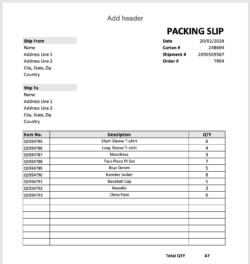
Understanding the theoretical components is one thing; seeing them structured in a practical format is another. Below is a sample layout that illustrates the key sections and information typically found in an effective air freight packing list template. This structure is designed for clarity and ease of use by all parties involved in the logistics chain.
Date: [Date of Preparation]
Packing List Number: [Unique Reference Number]
Air Waybill (AWB) Number: [Carrier's AWB Number]
Consolidation ID: [If applicable]

**Shipper Information:**
Company Name: [Your Company Name]
Address: [Your Company Address]
City, State, Zip: [Your City, State, Zip]
Country: [Your Country]
Contact Person: [Name]
Phone: [Phone Number]
Email: [Email Address]

**Consignee Information:**
Company Name: [Recipient Company Name]
Address: [Recipient Company Address]
City, State, Zip: [Recipient City, State, Zip]
Country: [Recipient Country]
Contact Person: [Name]
Phone: [Phone Number]
Email: [Email Address]

**Carrier/Forwarder Information:**
Name: [Carrier/Forwarder Name]
Reference: [Carrier/Forwarder Reference Number]

**Shipment Details:**
Total Number of Packages: [e.g., 10 cartons, 2 pallets]
Total Gross Weight (KGS): [Total Weight]
Total Net Weight (KGS): [Total Weight of Goods Only]
Total Volume (CBM): [Total Cubic Meters]
Origin Airport: [e.g., LAX]
Destination Airport: [e.g., LHR]
Expected Departure Date: [Date]
Expected Arrival Date: [Date]

**Detailed Cargo Breakdown:**

| Package No. | Description of Goods | HS Code | Quantity | Unit Weight (KGS) | Total Weight (KGS) | Dimensions (LxWxH cm) | Volume (CBM) | Remarks/Special Instructions |
|-------------|----------------------|---------|----------|-------------------|--------------------|------------------------|--------------|-----------------------------|
| 1/10        | Men's Cotton T-Shirts, Model #XYZ-123 | 6109.10 | 200 pcs  | 0.25              | 50.00              | 60x40x30               | 0.072        | Fragile, Do Not Stack       |
| 2/10        | Women's Denim Jeans, Model #ABC-456   | 6204.62 | 100 pcs  | 0.60              | 60.00              | 70x50x25               | 0.0875       |                             |
| ...         | ...                  | ...     | ...      | ...               | ...                | ...                    | ...          | ...                         |
| 10/10       | Leather Wallets, Model #QWE-789       | 4202.31 | 50 pcs   | 0.15              | 7.50               | 40x30x20               | 0.024        |                             |

**Additional Notes/Declarations:**
[Any specific customs declarations, dangerous goods notes, or other critical information not covered above.]

**Prepared By:**
Name: [Preparer's Name]
Title: [Preparer's Title]
Signature: [Signature]
This tabular format provides a clear, organized way to present all the necessary information. Using a consistent layout for your air freight packing list template will significantly enhance clarity and efficiency for everyone handling your shipment. Remember to fill in all fields accurately and completely for each air cargo consignment.
Mastering the creation of an accurate and detailed packing list is an indispensable skill for anyone involved in international air freight. By leveraging a comprehensive air freight packing list template, you not only comply with regulatory requirements but also significantly enhance the safety, speed, and efficiency of your cargo movements. This attention to detail reduces the likelihood of costly delays and ensures a smoother journey for your goods across borders.
Take the time to develop a robust template tailored to your specific shipping needs and ensure your team is thoroughly trained in its correct usage. Proactive preparation of this vital document will empower your business to navigate the complexities of global logistics with confidence. Always review your completed packing list against other shipping documents before dispatch to ensure absolute consistency and accuracy.