Are your team meetings often a blur, leaving everyone wondering who’s doing what by when? It’s a common challenge, but one that can be easily overcome with a robust meeting note template with action items. This simple yet powerful tool transforms chaotic discussions into clear, actionable plans, ensuring every minute spent in a meeting genuinely contributes to progress.
Imagine a world where decisions are documented, responsibilities are crystal clear, and deadlines are understood by everyone involved. That’s the power of structured meeting notes. They don’t just record what was said; they solidify commitments and create a transparent roadmap for your team to follow.
In this article, we will explore why such a template is indispensable for modern teams and guide you through creating one that truly boosts your productivity and keeps projects moving forward efficiently.
Why Effective Meeting Notes Are Crucial for Success
Meetings can often feel like time sinks, eating away at precious hours without yielding tangible results. Without a systematic approach to capturing discussions and, more importantly, decisions and next steps, you risk revisiting the same topics repeatedly, leading to frustration and delays. Effective meeting notes act as a shared memory for your team, preventing misunderstandings and keeping everyone aligned.
Think about the last time you left a meeting feeling unsure about what you were supposed to do next. That ambiguity is a direct result of poor note-taking. When notes are clear, concise, and focused on outcomes, they become a source of truth, eliminating the need for follow-up emails asking for clarification on previously discussed points.
Beyond Just Scribbling Down Points
Many people mistake basic note-taking for effective meeting documentation. Simply listing topics discussed or who said what isn’t enough. Truly valuable notes go beyond mere transcription; they interpret, summarize key decisions, and translate conversations into concrete actions. They highlight the “so what?” of every agenda item.
The real magic happens when your notes clearly delineate “action items.” This means identifying specific tasks, assigning them to an individual, and setting a clear deadline. Without this critical component, even the most brilliant ideas discussed in a meeting might never see the light of day, lost in the shuffle of daily work.
This focus on action items drives accountability within your team. When everyone knows who is responsible for what and by when, there’s less room for tasks to fall through the cracks. It empowers team members to take ownership and provides a framework for managers to track progress effectively without micromanaging.
Moreover, well-documented meeting notes foster a culture of transparency and responsibility. New team members can quickly catch up on past discussions and decisions, and anyone can refer back to the historical record to understand the context behind current projects. This level of organizational clarity significantly boosts overall productivity and reduces wasted effort.
Ultimately, investing time in creating and utilizing superior meeting notes is an investment in your team’s collective efficiency and success. It transforms what could be a mundane administrative task into a strategic tool that propels projects forward and ensures every meeting serves a real purpose.
Building Your Go-To Meeting Note Template
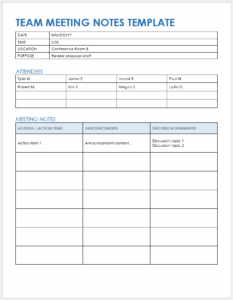
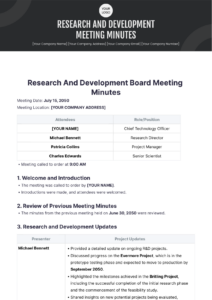
Creating a meeting note template might seem like a small administrative task, but it’s a foundational step towards more productive team interactions. A well-designed template provides a consistent structure for every meeting, ensuring that no critical information is missed and that all necessary elements for effective follow-up are captured.
The beauty of a template lies in its repeatability. Once you’ve established the key sections, you won’t have to reinvent the wheel for every new meeting. This saves time during the meeting itself, allowing participants to focus on the discussion rather than the mechanics of note-taking, and streamlines the post-meeting communication process.
Let’s break down the essential components you should include in your very own template to make sure you’re capturing everything needed to move forward productively:
- Meeting Title and Purpose: Clearly state what the meeting is about and its primary objective.
- Date, Time, and Location: Basic but crucial information for reference.
- Attendees: List who was present, and ideally, who was invited but absent.
- Meeting Objective/Agenda: A brief outline of topics to be covered and desired outcomes.
- Discussion Points and Key Decisions: Summarize the main topics discussed and the definitive choices made.
- Action Items: This is the heart of any effective meeting note template with action items. For each item, clearly list:
- Task description (what needs to be done)
- Owner (who is responsible)
- Due Date (when it needs to be completed)
- Status (open, in progress, completed)
- Next Steps and Follow-up Meeting: Any immediate next actions or if another meeting is scheduled.
By systematically recording these elements, especially the detailed action items, your template becomes a living document that holds everyone accountable. It moves beyond just a record of conversation to a powerful project management tool, making sure that every discussion translates into tangible progress.
Remember, the goal isn’t just to write things down, but to create a clear, actionable plan that can be easily shared and referenced, preventing miscommunication and driving efficient execution. A comprehensive template ensures this happens consistently, meeting after meeting.
Embracing a structured approach to meeting documentation fundamentally changes how your team operates. No longer will decisions linger in ambiguity or tasks be forgotten. Instead, a clear record of discussions, reinforced by precise action items, transforms your meetings from passive information exchanges into proactive engines of productivity.
By implementing a consistent template, you’re not just organizing notes; you’re cultivating a culture of clarity, accountability, and continuous progress. This small change has a significant ripple effect, empowering your team to achieve more, reduce bottlenecks, and ultimately, succeed in their collective endeavors with greater efficiency and less friction.