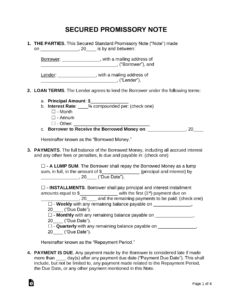
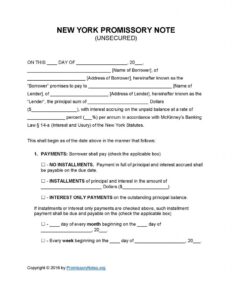
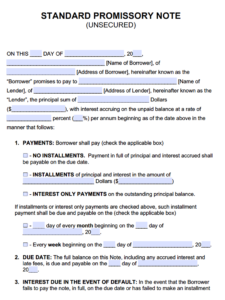
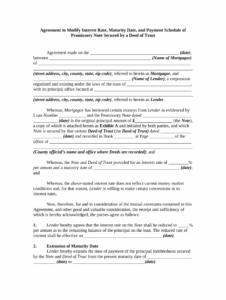
Life often throws curveballs, and sometimes, even the most carefully planned financial arrangements need a little tweaking. A promissory note, at its heart, is a written promise to repay a debt under specific terms. It’s a fundamental document in personal loans, business financing, and even real estate transactions, outlining everything from the loan amount and interest rate to the repayment schedule and maturity date. While you hope everything goes according to plan, circumstances can change.
That’s where the flexibility of an addendum comes into play. If you find yourself in a situation where the original terms of a promissory note no longer quite fit, you don’t necessarily need to scrap the whole agreement and start from scratch. Instead, you can use an addendum to promissory note template to formally document any modifications or additions, ensuring all parties are clear on the updated understanding. It’s about adapting without undermining the original commitment.
These changes can range from minor adjustments to significant overhauls, but the key is that they must be agreed upon by all parties involved and properly documented. A well-executed addendum provides a clear, legally sound way to update the terms of the original note, protecting the interests of both the borrower and the lender as conditions evolve.
Why You Might Need an Addendum to a Promissory Note
Think of a promissory note as a roadmap for a loan. Sometimes, during the journey, you might encounter unforeseen detours or decide on a different route. Perhaps the borrower experiences unexpected financial hardship and needs a temporary adjustment to their payment schedule. Or maybe the lender wants to extend the loan term, or the parties decide to modify the interest rate to reflect current market conditions. These are all valid reasons to revisit the original agreement.
An addendum provides a formal, legally binding way to make these changes without having to draft an entirely new promissory note. It ensures that both parties acknowledge and agree to the new terms, preventing future misunderstandings or disputes. It’s much like updating a contract; you wouldn’t just verbally agree to a change in a major contract, and the same principle applies here. The addendum becomes an integral part of the original note, effectively updating the active terms of the loan.
For instance, if a borrower has been diligently making payments but suddenly faces a temporary loss of income, an addendum could be used to temporarily reduce monthly payments or even pause them for a set period. Similarly, if a lender wants to offer a lower interest rate as an incentive or to help the borrower avoid default, an addendum is the perfect tool to formalize this beneficial change.
Common Scenarios for Using an Addendum
- Changing the repayment schedule, such as extending the loan term or temporarily pausing payments.
- Adjusting the interest rate, either upwards or downwards, based on new agreements or market conditions.
- Modifying the original loan amount, perhaps through an additional disbursement or a partial forgiveness.
- Adding or removing collateral that secures the promissory note.
- Extending the maturity date of the loan, giving the borrower more time to repay.
- Changing parties involved, for example, if the lender assigns the note to another entity, or a co-signer is added or removed.
Regardless of the specific change, the underlying principle remains the same: an addendum serves as a clear, written record of the updated agreement. It reflects the evolution of the loan terms, demonstrating that both parties are adaptable and committed to maintaining a working financial relationship. It’s crucial that all parties sign and date the addendum, just as they did the original note, to signify their consent.
Crafting Your Addendum to Promissory Note Template Effectively
When you’re ready to create an addendum, clarity and precision are your best friends. A well-drafted addendum leaves no room for ambiguity, clearly stating what parts of the original promissory note are being changed and what the new terms are. It’s not about rewriting the entire document, but rather pinpointing the specific clauses or sections that require modification.
Start by clearly identifying the original promissory note. This includes its original date, the names of the borrower and lender, and any unique identification numbers. Then, specify the effective date of the addendum itself. This ensures everyone knows exactly when the new terms come into force. The body of the addendum will then detail the specific changes being made. Be as explicit as possible, quoting the original language where necessary and then presenting the revised language.
Here are some key elements you’ll want to include:
- Identification of the Original Note: Clearly reference the original promissory note by its date, parties involved, and any unique identifiers.
- Effective Date of the Addendum: State the exact date from which the changes outlined in the addendum will take effect.
- Specific Changes Being Made: Detail each modification with absolute clarity. For example, “Paragraph 3, ‘Interest Rate,’ is hereby amended to state ‘The interest rate shall be 7% per annum’ instead of ‘The interest rate shall be 5% per annum.'”
- Affirmation of Original Terms: Include a statement that all other terms and conditions of the original promissory note not specifically amended by this addendum remain in full force and effect.
- Signatures of All Parties: All parties who signed the original promissory note must also sign and date the addendum, signifying their agreement to the changes.
- Witnesses or Notarization: Depending on the significance of the changes and local legal requirements, having witnesses or a notary public attest to the signatures can add an extra layer of legal validity.
Remember, an addendum to promissory note template is a powerful tool for maintaining the integrity of your loan agreements while allowing for necessary adjustments. It demonstrates good faith and ensures that all parties remain on the same page, even when circumstances evolve.
Navigating the financial landscape requires both foresight and flexibility. While a promissory note sets the foundation for a financial agreement, the ability to adapt those terms when necessary is invaluable. Using a properly prepared addendum ensures that any modifications are legally sound and transparent for everyone involved.
By meticulously documenting every change, you protect both the lender’s investment and the borrower’s ability to fulfill their obligations. It’s a testament to the fact that even in formal financial dealings, open communication and a willingness to adapt can lead to stronger, more resilient agreements that stand the test of time and changing conditions.