Navigating the world of lending and borrowing can often feel complex, especially when dealing with specific financial arrangements. A promissory note is a fundamental legal document that outlines the terms of a loan between two parties, promising repayment of a debt. It serves as a written record of the borrower’s commitment to pay back a specific sum of money to the lender within a defined timeframe.
Among the various types of promissory notes, the interest-only version stands out for its unique payment structure. This particular note allows the borrower to make only interest payments for a set period, deferring the principal repayment until later. For many individuals and businesses, finding a reliable interest only promissory note template is the first step in formalizing such an agreement, ensuring all necessary details are clearly documented.
Understanding how these notes work and what components they should include is crucial for both lenders and borrowers. This article will guide you through the intricacies of an interest only promissory note, helping you grasp its structure and how to effectively utilize a template to create a legally sound and clear agreement.
Understanding the Basics of an Interest Only Promissory Note
An interest only promissory note is a financial instrument where the borrower agrees to pay only the interest on the principal loan amount for a specified duration. During this period, the principal balance of the loan remains unchanged. Once this initial interest-only phase concludes, the borrower typically begins making payments that include both principal and interest, or the entire principal amount becomes due in a balloon payment. This structure offers flexibility, particularly beneficial in situations where a borrower anticipates future cash flow to cover the principal.
This type of note is frequently used in various financial scenarios. For instance, in real estate, it might be used as a bridge loan for property development, allowing the developer to focus on project completion before principal repayment begins. Similarly, individuals might use it for personal loans where immediate principal repayment would be a burden, but they foresee a future lump sum payment or increased income. It is also common in intra-family loans or situations where a startup business needs an initial period of lower payments to establish itself.
The primary appeal of an interest only promissory note lies in its ability to reduce immediate financial strain on the borrower. By delaying principal payments, borrowers can manage their cash flow more effectively in the short term, dedicating resources to other needs while still fulfilling their obligation to the lender for the use of the funds. However, it is essential for both parties to understand that the principal will eventually need to be repaid, often in a more substantial lump sum or through accelerated payments after the interest-only period ends.
Key Components You’ll Find in a Template
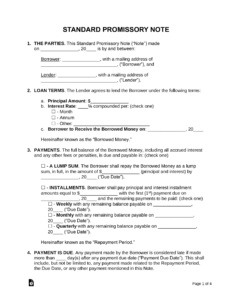
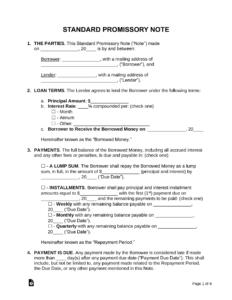
A comprehensive interest only promissory note template will typically include several critical sections that define the terms of the loan and protect both parties. These elements ensure clarity and legal enforceability.
Here are the essential components you should look for and fill out:
- Parties Involved: Clearly identify the lender and the borrower, including their full legal names and addresses.
- Principal Amount: State the exact sum of money being borrowed.
- Interest Rate: Specify the annual interest rate applied to the principal.
- Interest Only Period: Define the precise duration for which only interest payments will be made.
- Payment Schedule: Detail how often interest payments are due during the interest-only period (e.g., monthly, quarterly).
- Maturity Date: The date by which the entire principal amount (and any remaining interest) must be repaid. This could be a single lump sum or the start of a new amortization schedule.
- Default Terms: Outline what constitutes a default (e.g., missed payments) and the consequences, such as acceleration of the entire loan balance.
- Governing Law: Specify the state or jurisdiction whose laws will govern the promissory note.
- Signatures: Spaces for both the lender and borrower to sign and date the document.
Each of these components plays a vital role in ensuring the agreement is clear, enforceable, and covers potential contingencies. A well-drafted template will provide placeholders for these details, guiding you to input the correct information. While a template offers a solid foundation, remember that it serves as a starting point. It may need customization to fit the unique specifics of your lending arrangement.
Steps to Effectively Use and Customize Your Template
When you acquire an interest only promissory note template, the next crucial step is to carefully review and customize it to match your specific loan agreement. Simply downloading a template is not enough; thoughtful input and attention to detail are paramount to creating a legally sound and effective document. Taking the time to accurately complete each section will prevent misunderstandings and potential disputes down the line.
The process involves meticulously filling in all the blanks and making any necessary adjustments to the default clauses. Start by accurately identifying the full legal names and contact information for both the lender and the borrower. Clearly state the principal amount being borrowed and the agreed-upon interest rate. Defining the exact duration of the interest-only period and the subsequent repayment structure for the principal is perhaps the most distinctive and important aspect of this note.
Here is a recommended approach for completing your template:
- Identify the Parties: Input the full legal names and addresses of the borrower and lender.
- Fill in Financial Details: Accurately state the principal amount of the loan and the agreed-upon interest rate.
- Define Payment Terms: Clearly specify the interest-only period duration and the frequency of interest payments (e.g., "for 12 months, interest payable on the 1st of each month").
- Specify Maturity: Clearly state the maturity date, outlining whether the principal is due as a lump sum or if an amortization schedule will commence.
- Include Default Clauses: Review and tailor the default provisions to reflect the agreed-upon consequences of missed payments or other breaches.
- Ensure Proper Execution: Both parties must sign and date the promissory note. Consider having signatures witnessed or notarized for added legal weight, depending on local requirements and the loan’s significance.
Once you have completed and customized the template, it is always advisable to have a legal professional review the document. A lawyer can ensure that the note complies with all applicable state and local laws, accurately reflects your intentions, and provides adequate protection for both the borrower and the lender. This professional review can save significant trouble and expense in the future, providing peace of mind that your financial agreement is robust and enforceable.
A well-constructed interest only promissory note offers a valuable tool for structuring flexible loan agreements, benefiting both lenders and borrowers by providing a clear framework for repayment. Its ability to defer principal payments allows for immediate financial flexibility while still ensuring the eventual repayment of the debt. Using a reliable template streamlines the creation of this document, making it accessible even for those without extensive legal knowledge.
However, the real strength of such a document lies not just in its existence, but in its precise and thoughtful customization. Every clause, every date, and every amount needs to accurately reflect the specific understanding between the parties. Taking the time to fill in the details meticulously and seeking legal advice when necessary will ensure that the promissory note serves its intended purpose effectively and stands as a clear, legally binding record of the financial commitment.